

History, Meaning, and Why These Two Gems Are So Coveted
Some gemstones are loved instantly. Others grow on you slowly—until one day you realize you can’t stop thinking about them. Alexandrite and Spinel fall firmly into the second category. They’re rare, layered, and quietly powerful, the kind of stones that feel personal the moment you learn their story.
At Lorraine Fine Jewelry, we’re drawn to gemstones with depth—stones that aren’t just beautiful, but meaningful. Alexandrite and Spinel both fit that description effortlessly.
Alexandrite: A Gemstone That Refuses to Be One Thing
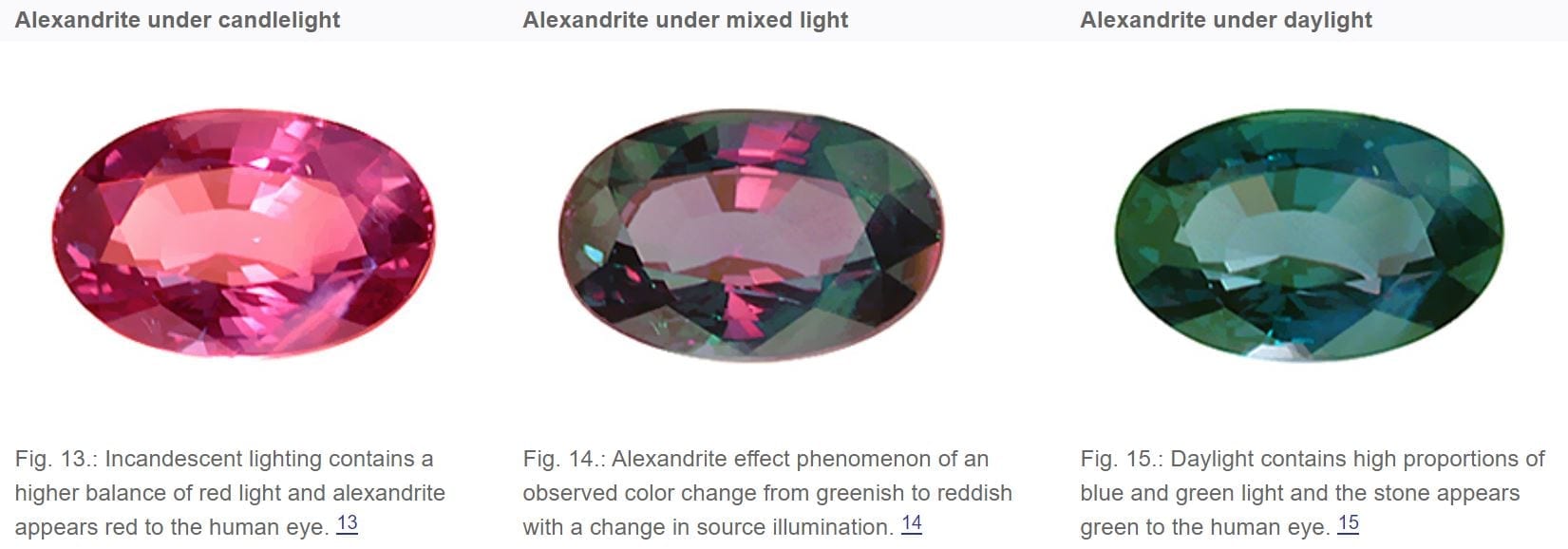
Alexandrite is famous for its color-changing ability, a phenomenon that feels almost unreal until you see it in person. In natural daylight, the stone appears green to bluish-green. Under warm indoor light, it transforms into shades of red and purplish wine. The shift is dramatic yet elegant, like the gemstone is responding to its surroundings rather than dominating them.
Discovered in the Ural Mountains of Russia in the early 1800s, Alexandrite was named after Tsar Alexander II and quickly became associated with Russian royalty and prestige. Early miners initially mistook it for emerald, only realizing later that this gem had an entirely different personality. That moment of discovery—when its color change revealed itself—cemented Alexandrite as one of the most fascinating gemstones in the world.
The secret behind this transformation lies in chromium within the stone’s crystal structure. Depending on the light source, Alexandrite absorbs and reflects different wavelengths, creating its signature shift. Because this effect occurs naturally and requires very specific geological conditions, fine Alexandrite is exceptionally rare. That rarity, paired with its visual intrigue, is what makes it so highly coveted by collectors and designers alike.
Spinel: The Most Beautiful Gem You’ve Been Overlooking
Spinel has one of the most fascinating reputations in gemstone history, largely because it spent centuries being mistaken for something else. Many famous “rubies” in royal collections—including those set into crowns—were later revealed to be Spinel. Far from diminishing its value, this history has given Spinel a quiet kind of prestige.
What makes Spinel especially compelling is its natural range of color. From rich reds and vivid pinks to lavender, cobalt blue, and deep violet, Spinel offers saturation and brilliance without relying heavily on treatments. Its clarity and strength make it ideal for everyday fine jewelry, and its durability means it holds up beautifully over time.
For years, Spinel flew under the radar, overshadowed by better-known gemstones. Recently, though, collectors and designers have begun to recognize what’s been hiding in plain sight. As awareness grows, so does appreciation—and value. Spinel is no longer the understudy. It’s finally stepping into the spotlight.
Two Stones, Two Personalities, One Shared Allure
Alexandrite and Spinel are often compared because both are rare, durable, and highly desirable, yet they appeal in very different ways. Alexandrite is all about transformation and mystery, prized for a visual effect few gemstones can replicate. Spinel offers consistency and vibrancy, with a color range that feels expressive and confident.
Both stones perform beautifully in fine jewelry and are increasingly sought after by collectors who value authenticity over hype. Alexandrite tends to command higher prices due to its scarcity, while Spinel is gaining momentum as more people discover its history and natural beauty.
Meaning That Goes Beyond Aesthetics
Alexandrite has long been associated with balance, adaptability, and transformation. Its ability to shift colors has made it a symbol of personal growth and good fortune, particularly in Russian tradition. In modern interpretations, it’s often chosen to mark life changes—new chapters, new beginnings, and moments of becoming.
Spinel carries a different kind of energy. It’s traditionally linked to revitalization, protection, and renewed motivation. Many cultures view it as a stone that restores balance and encourages forward movement. Its bold colors are thought to inspire creativity and confidence, making it a favorite among artists and independent thinkers.
Origin, Rarity, and Why It All Matters
Alexandrite is primarily sourced from Russia, Brazil, and Sri Lanka, with Russian stones remaining the most historically significant and rare. Spinel is found in regions such as Myanmar, Sri Lanka, and Tanzania, each producing stones with distinct color profiles and clarity. These origins directly influence value, character, and desirability, which is why sourcing matters as much as design.

The Lorraine Perspective
Alexandrite and Spinel aren’t trend gemstones. They’re intentional choices. They appeal to people who value story, craftsmanship, and individuality—those who want their jewelry to feel as thoughtful as it is beautiful.
Whether you’re drawn to Alexandrite’s ever-changing depth or Spinel’s unapologetic color and strength, these gemstones offer something lasting. Not just sparkle, but substance.
Because the most compelling jewelry doesn’t shout.
It lingers.


